
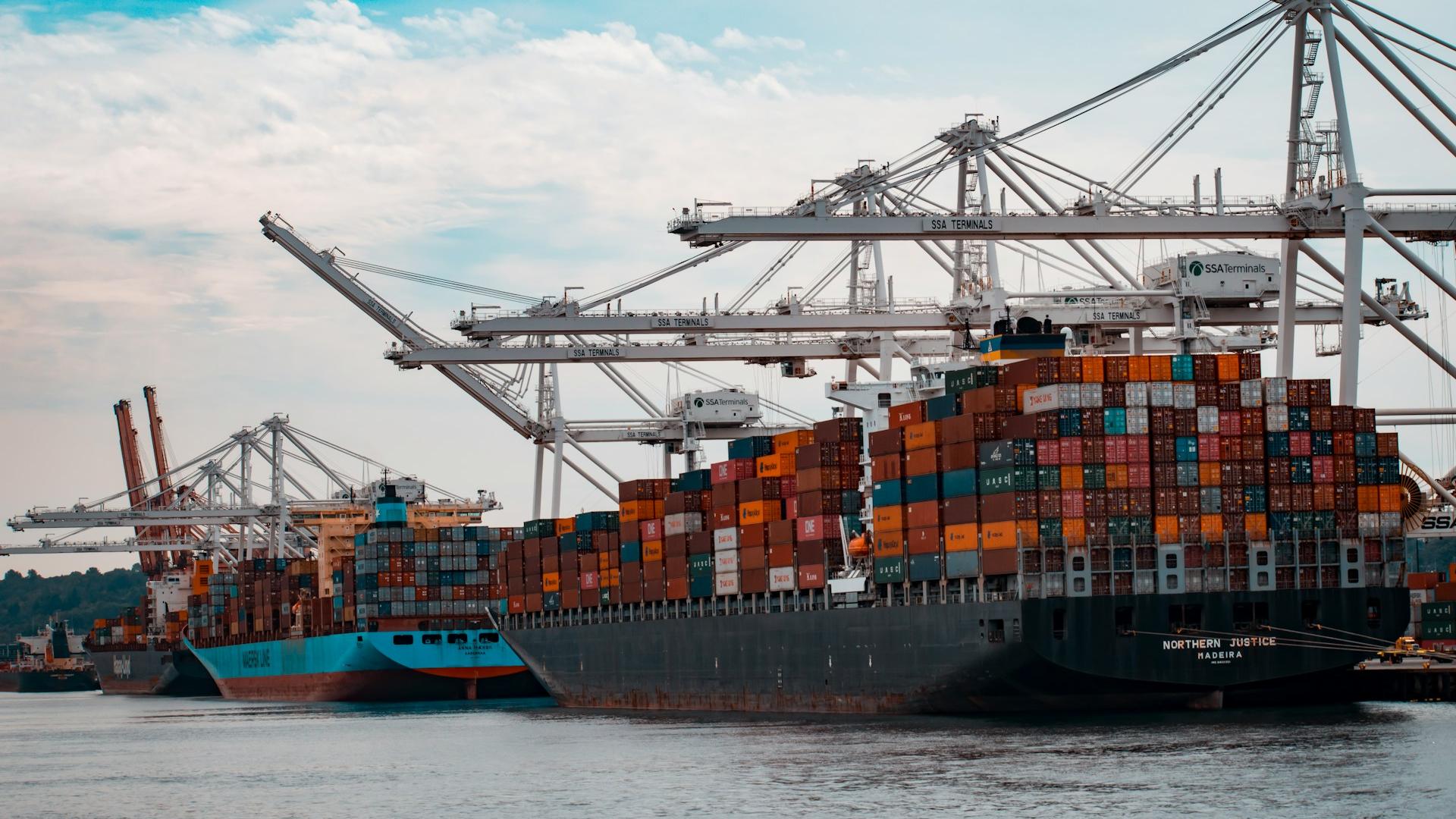
A historic rise in iron ore shipments, booming gold exports to Europe, and record levels of industrial imports are reshaping Guinea’s economic landscape. For investors, the latest trade data offers valuable insight into where the country’s next growth opportunities may emerge.
The Numbers That Are Changing Guinea’s Economic Story
For years, Guinea's economic narrative was largely associated with bauxite.
Today, that story is changing.
The launch and rapid ramp-up of exports from Simandou, combined with rising international demand for Guinean gold, are transforming the country's trade profile and accelerating its integration into global supply chains.
According to trade data for April and May 2026, Guinea recorded one of the strongest export performances in its modern economic history.
Exports reached GNF 18,684.1 billion in April 2026, representing annual growth of 56.9%.
Behind these figures lies a deeper structural shift: Guinea is becoming increasingly diversified, internationally connected, and strategically important to both Asian and European markets.
Simandou Is No Longer a Future Project — It Is an Economic Reality
For decades, Simandou was viewed as one of the world's most promising undeveloped iron ore deposits.
In 2026, it is becoming one of Guinea's most powerful economic engines.
Just months after the first commercial shipments departed for China in late 2025, export volumes have accelerated dramatically.
Iron ore exports increased by more than 259% in April 2026 alone.
Industry tracking data indicates that monthly shipments rose from less than 600,000 tonnes during the first quarter to approximately 1.3 million tonnes in April before reaching between 2.2 and 2.3 million tonnes in May.
These figures highlight more than operational success.
They demonstrate the emergence of an entirely new export pillar capable of reshaping Guinea's external trade balance for years to come.
For investors, the message is clear:
The Simandou ecosystem is moving from construction phase to economic production phase.
And wherever large-scale production begins, secondary opportunities follow.
Why Simandou Matters Beyond Mining
The significance of Simandou extends far beyond iron ore exports.
Major mining projects create demand across entire economic ecosystems.
As production scales, the need for transportation, logistics, equipment maintenance, fuel supply, engineering services, housing, food supply chains, and industrial infrastructure increases simultaneously.
This creates a multiplier effect throughout the economy.
For entrepreneurs and investors, some of the most attractive opportunities may not be inside the mine itself but within the network of businesses supporting its operations.
Historically, these secondary industries generate substantial long-term value and often provide more accessible entry points for private capital.
Gold Is Quietly Redrawing Guinea’s Trade Relationships
While Simandou dominates headlines, gold is reshaping Guinea’s commercial diplomacy.
China remains Guinea's largest trading partner, accounting for approximately GNF 11,260 billion in trade flows, largely driven by bauxite and iron ore.
However, the most significant development comes from Europe.
Italy emerged as Guinea’s second-largest export destination, receiving approximately GNF 4,275.4 billion in exports linked almost entirely to gold transactions.
France also recorded a remarkable increase in purchases of Guinean gold, rising from GNF 11.5 billion in March to nearly GNF 1,697.5 billion in April.
Meanwhile, the United Arab Emirates and South Africa continue to strengthen their role as strategic markets for precious metals.
This evolution is strategically important.
It reduces Guinea’s dependence on a single export corridor and expands access to multiple international sources of foreign currency earnings.
For investors, diversification at the national level often translates into greater economic resilience over time.
The Other Side of the Boom: Why Imports Are Surging
Rapid economic expansion comes with costs.
One of the most important signals in the latest trade data is the sharp increase in imports.
Although Guinea maintained a positive trade balance, the surplus declined from GNF 5,987.1 billion in March to GNF 3,047.1 billion in April.
The reason is straightforward.
Imports surged by 26.6%, reaching GNF 15,637 billion.
Rather than signaling weakness, these imports reveal the scale of ongoing industrial development.
The country is importing:
- Construction machinery
- Heavy cranes
- Industrial vehicles
- Fuel products
- Mining equipment
- Logistics infrastructure
Most of these imports are directly linked to mining expansion and large-scale infrastructure projects.
For investors, this trend highlights an often-overlooked reality:
The mining boom is generating enormous demand for logistics, maintenance, transportation, and industrial services.
A Less Visible Winner: Agriculture
While mining dominates export revenues, agriculture is quietly showing signs of strength.
Recent trade data indicates:
- Cashew exports increased by 56.8%
- Other fresh and dried nut exports rose by 89.6%
These figures may appear modest compared to iron ore volumes, but they reveal an important opportunity.
Unlike mining projects that often require hundreds of millions of dollars in capital, agricultural value chains offer lower barriers to entry and faster execution timelines.
For diaspora investors and SMEs, agriculture may represent one of the most accessible ways to participate in Guinea's growth story.
As mining corridors expand and incomes rise, demand for food production, processing, storage, and distribution is expected to grow alongside them.