
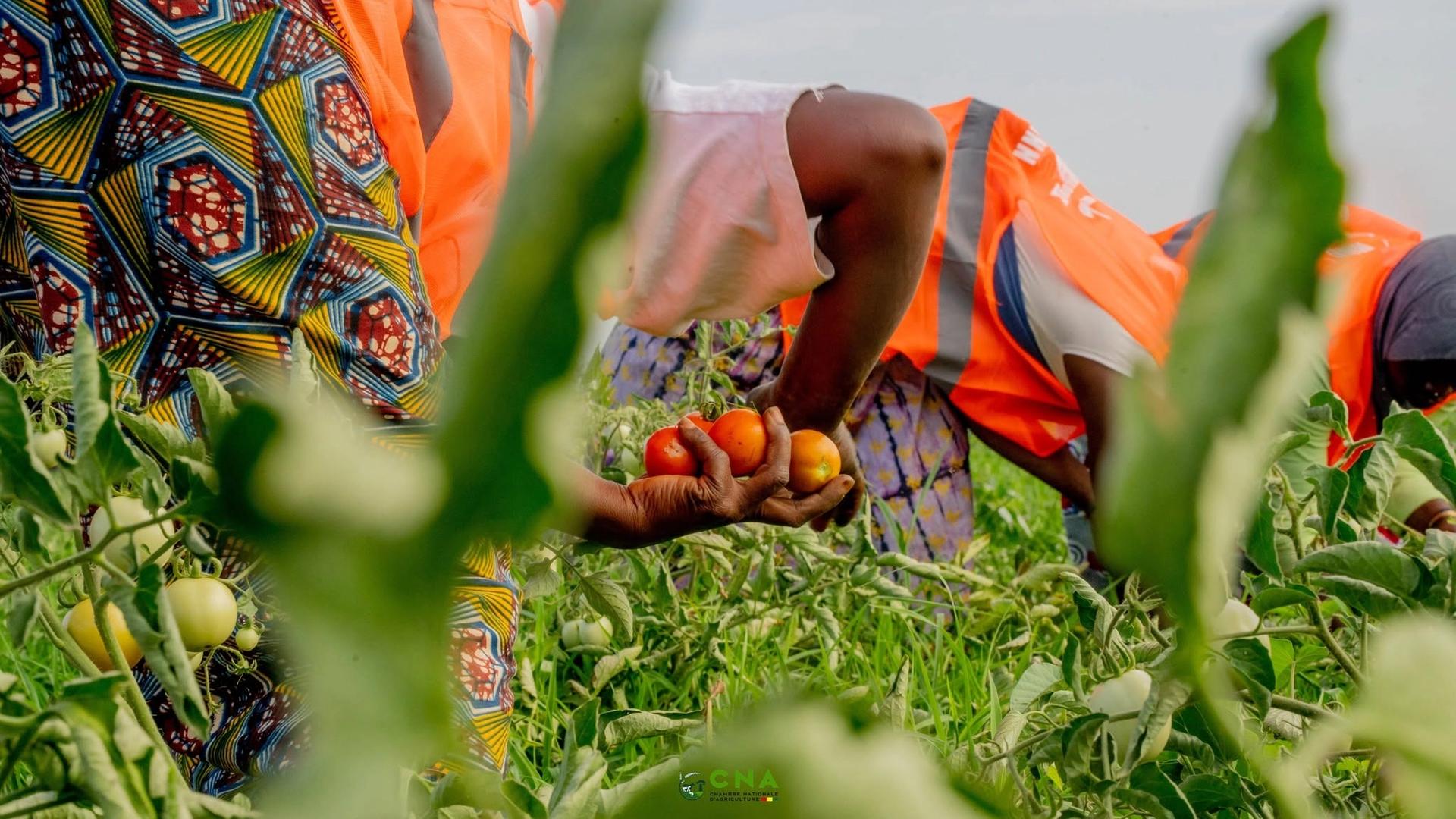
The concept of a sovereign state remains entirely hollow without absolute food security. For decades, Guinea’s agricultural matrix suffered from severe structural fragmentation—leaving its smallholders vulnerable to erratic middleman logistics, high input costs, and an over-reliance on imported foreign seeds.
However, June 2026 has marked a definitive breaking point. Working in close executive lockstep with the Ministry of Agriculture, led by Minister Aminata Kaba, the National Chamber of Agriculture of Guinea (CNA) has broken away from traditional administrative routines to orchestrate a high-velocity campaign aimed at modernizing the country's rural economy.
The June 2026 Operational Breakthroughs
The operational velocity of the Chamber is clearly demonstrated by three major agreements and deployments executed within the opening weeks of June 2026:
1. The Death of Imported Inputs
On Friday, May 22, and consolidated through extensive field rollouts on June 15, 2026, President Souleymane Bérété signed critical country-wide distribution pacts alongside prominent national institutions like the Crédit Rural de Guinée (managed by Amara Kourouma) and agricultural suppliers CST Africat.
This mechanism directly decentralizes the supply chain for subvented total herbicides and inputs. By eliminating independent trading rings, the CNA guarantees that price-capped inputs go directly to rural producers, effectively lowering production costs across all prefectures.
2. The Local Seed Mandate
During the comprehensive policy briefing led by Minister Aminata Kaba and CNA executives, Guinea officially terminated its structural reliance on foreign-sourced rice, corn, cotton, and potato seeds.
The 2026–2027 campaign relies entirely on domestic seed multiplication networks. This initiative is heavily backed by automated soil analysis labs and state-leased heavy machinery, ensuring local producers can expand their seasonal outputs predictably.
3. High-Velocity Field Audits
Moving away from centralized Conakry operations, the CNA's Suivi-Évaluation (Monitoring and Evaluation) department, led by Moussa Camara, completed an extensive regional field tour through Labé, Benty, and Kankan.
The impacts are highly visible on the ground: in the Sannou and Afia districts, the regional cooperative network successfully brought vast acreages under permanent fencing. Concurrently, in Daralabé, the installation of solar-powered borehole networks hosting four 5,000-liter storage tanks has successfully insulated local farmers from traditional seasonal droughts.
Simandou 2040: Agribusiness as a Primary Industrial Asset
The most critical strategic milestone occurred on Friday, June 5, 2026, during the official executive launch of the Simandou 2040 Program – Pillar 1 (Agriculture). Presided over by General Amara Camara (Minister Secretary-General of the Presidency) and Djiba Diakité (Chairman of the Simandou 2040 Strategic Committee), this high-level assembly designated agribusiness as a primary engine for domestic wealth creation.
Representing the Chamber, 1st Vice-President Madina Dansoko highlighted that Simandou 2040 will not be driven by raw mineral extraction alone, but by structural value preservation on Guinean soil. The plan mandates the creation of regional agro-industrial parks and structured logistics corridors designed to funnel local produce straight into the catering supply chains of major mining sites.
By enforcing rigorous compliance through the CNA's decentralized extension services, Guinea is transforming its farming sector into a highly bankable asset class, moving closer toward complete national food self-sufficiency.