
A Hidden Opportunity Behind Guinea’s Mining Expansion
When investors think about Guinea’s mining sector, they typically focus on bauxite, gold, iron ore, or the multinational companies extracting them.
Yet some of the most attractive investment opportunities are not found inside the mines themselves.
They are found in the logistics infrastructure that keeps those mines operating every day.
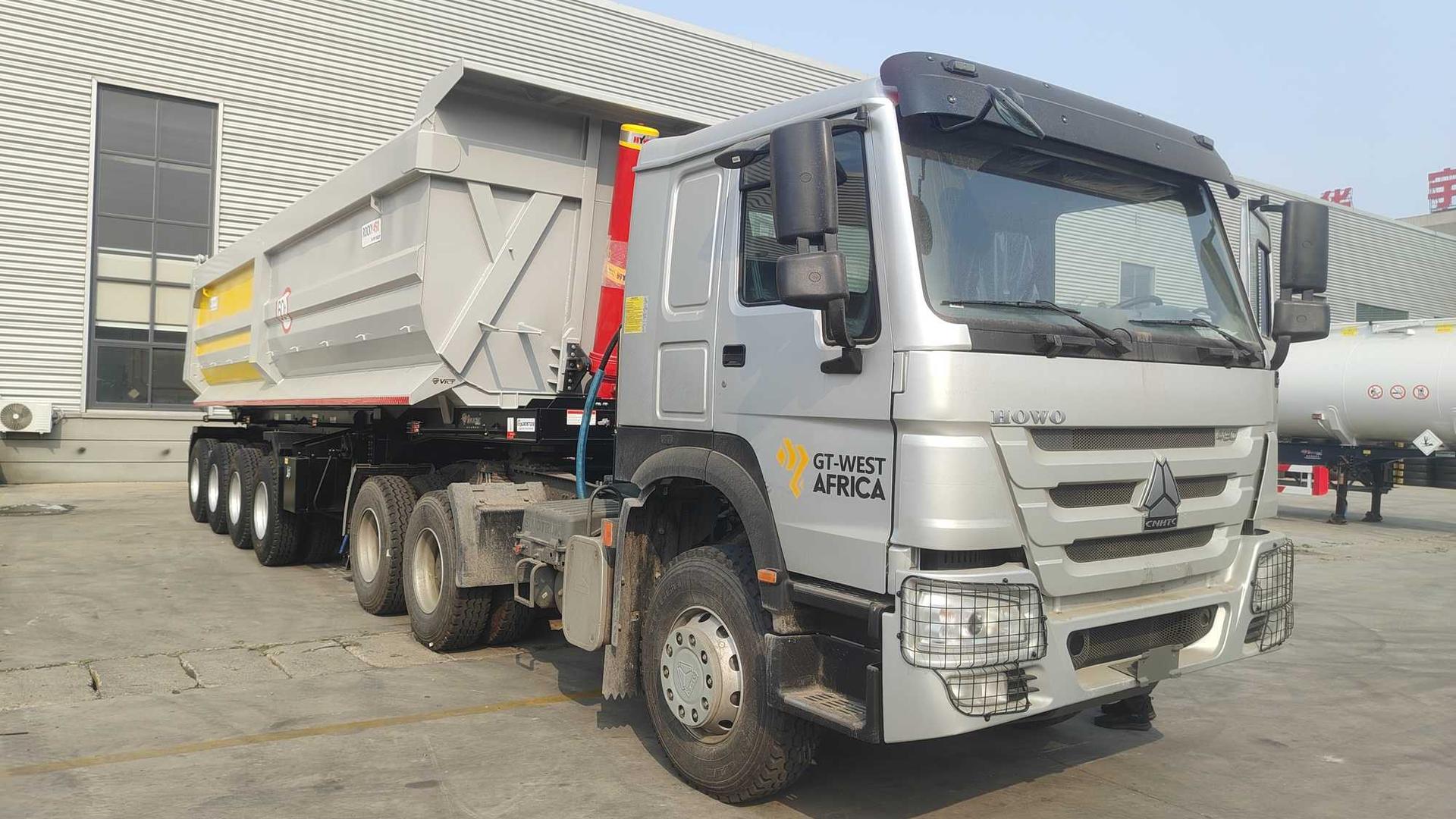
As Guinea experiences one of the fastest mining expansions in Africa, demand for heavy equipment—including dump trucks, fuel tankers, excavators, bulldozers, and site-support machinery—continues to rise. Every mining project depends on a constant flow of equipment capable of transporting materials, preparing sites, and supporting daily operations.
Without logistics, mining stops.
And wherever critical infrastructure is scarce, investment opportunities emerge.
Why Mining Logistics Matters More Than Most Investors Realize
The mining industry generates billions in economic activity, but much of its operational success depends on equipment owners and logistics providers.
For years, accessing this market remained out of reach for individual investors.
The barriers were significant:
- Heavy equipment often costs between €75,000 and €265,000 per unit.
- Maintenance requires specialized expertise.
- Mining contracts are difficult to secure independently.
- Operational management requires local teams and industry relationships.
As a result, participation was largely restricted to institutional investors and large operators.
GT West Africa was created to change that.
The Business Model: Connecting Diaspora Capital with Real Assets
Founded by Mohamed Bayo, Chief Executive Officer, and Karamba Diaby, Director of Business Development, GT West Africa has developed a model designed to connect diaspora savings with industrial assets operating in Guinea and across West Africa.
Rather than purchasing stocks or speculative financial products, investors acquire ownership stakes in specific revenue-generating equipment.
These assets may include:
- Fuel tankers
- Dump trucks
- Flatbed trucks
- Excavators
- Bulldozers
- Other industrial machinery supporting mining and construction activities
The company then deploys these assets on commercial contracts across the region.
Revenue generated from equipment operations is distributed to investors through periodic returns while GT West Africa manages deployment, maintenance, and contract execution.
The model effectively transforms large industrial assets into accessible investment opportunities.
Why Investors Are Paying Attention
Several macroeconomic trends are converging in favor of mining logistics.
1. Mining Activity Continues to Expand
Guinea remains one of the world's most important mining jurisdictions, particularly in bauxite production. New projects, infrastructure developments, and industrial investments continue to increase demand for equipment and transportation services.
2. Infrastructure Demand Remains Structural
Unlike commodity prices, logistics requirements do not disappear overnight.
Every active mining project requires transportation, site preparation, fuel delivery, and operational support.
This creates recurring demand for industrial equipment.
3. Real Asset Exposure
Many investors are increasingly seeking exposure to tangible assets rather than purely financial products.
Heavy equipment generates value through productive use in the real economy, providing a different risk profile compared to traditional market investments.
4. Accessibility
One of the most notable aspects of the GT West Africa model is accessibility.
Participation begins at approximately €2,500, allowing smaller investors to gain exposure to an asset class that was previously reserved for large capital holders.
Inside the Numbers
Data Room: GT West Africa’s Operational Footprint
€8+ Million Raised
The company has reportedly mobilized more than €8 million from private investors.
85+ Assets Financed
More than 85 pieces of industrial equipment have been financed and deployed.
200+ Employees
A workforce exceeding 200 employees supports field operations, maintenance, and project execution.
€1.2 Million Distributed in 2025
The company reports more than €1.2 million distributed to investors during 2025, providing an important indicator of operational activity and cash-flow generation.
Understanding the Risks
No investment offering high returns comes without risk.
Investors should evaluate mining logistics with the same discipline applied to any infrastructure or industrial asset investment.
Key risks include:
Equipment Downtime
Heavy machinery operates in demanding environments.
Mechanical failures, maintenance requirements, and replacement cycles can affect operational performance.
Contract Risk
Revenue generation depends on maintaining active commercial contracts.
Reduced mining activity or project delays can impact utilization rates.
Seasonal Challenges
West African weather patterns, particularly the rainy season, may affect operational efficiency in certain regions.
Commodity Market Exposure
Although logistics providers do not directly extract minerals, mining activity ultimately depends on broader commodity market conditions.
Understanding these dynamics is essential for evaluating long-term performance.
How GT West Africa Attempts to Mitigate Operational Risk
According to the company, risk management is addressed through several mechanisms.
The operational team oversees fleet maintenance and deployment, while technical management is designed to maximize equipment availability.
The company also works with established equipment manufacturers such as XCMG, SINOTRUK, and HOWO to support fleet operations.
Insurance coverage is reportedly provided through NSIA, helping protect assets against major operational incidents and unforeseen losses.
While no risk-management system can eliminate risk entirely, these measures aim to improve resilience and operational continuity.
What Existing Investors Reveal About the Model
The diversity of investor profiles highlights the flexibility of the platform.
Some investors choose concentrated exposure through ownership of a single asset, while others prioritize diversification across multiple machines and project types.
This mirrors strategies commonly used in traditional investment portfolios.
The key lesson is straightforward:
Diversification often reduces operational concentration risk.
For investors seeking exposure to industrial assets, spreading capital across multiple equipment categories may provide a more balanced risk-return profile than relying on a single machine.
Why This Matters for Guinea
Beyond individual returns, the broader significance of mining logistics lies in its contribution to economic development.
Industrial equipment enables mining operations, supports infrastructure projects, creates employment opportunities, and strengthens local value chains.
As Guinea continues positioning itself as one of Africa’s most important mining destinations, logistics capacity will become increasingly critical.
Companies capable of mobilizing capital, deploying equipment, and supporting industrial activity stand to benefit from this long-term trend.
More importantly, they create mechanisms through which diaspora capital can participate directly in productive sectors of the Guinean economy.
What Comes Next?
The future of Guinea’s mining sector will not be determined solely by the companies extracting resources from the ground.
It will also depend on the ecosystem of logistics providers, infrastructure operators, equipment owners, and service companies supporting those operations.
GT West Africa is positioning itself at the intersection of these trends.
For investors evaluating opportunities in Guinea, the company offers a case study in how financial innovation can bridge international capital and real economic activity.
As mining investment continues to expand across West Africa, logistics may prove to be one of the region’s most underestimated growth sectors and one of the most accessible entry points for diaspora investors seeking exposure to Africa’s industrial future.