
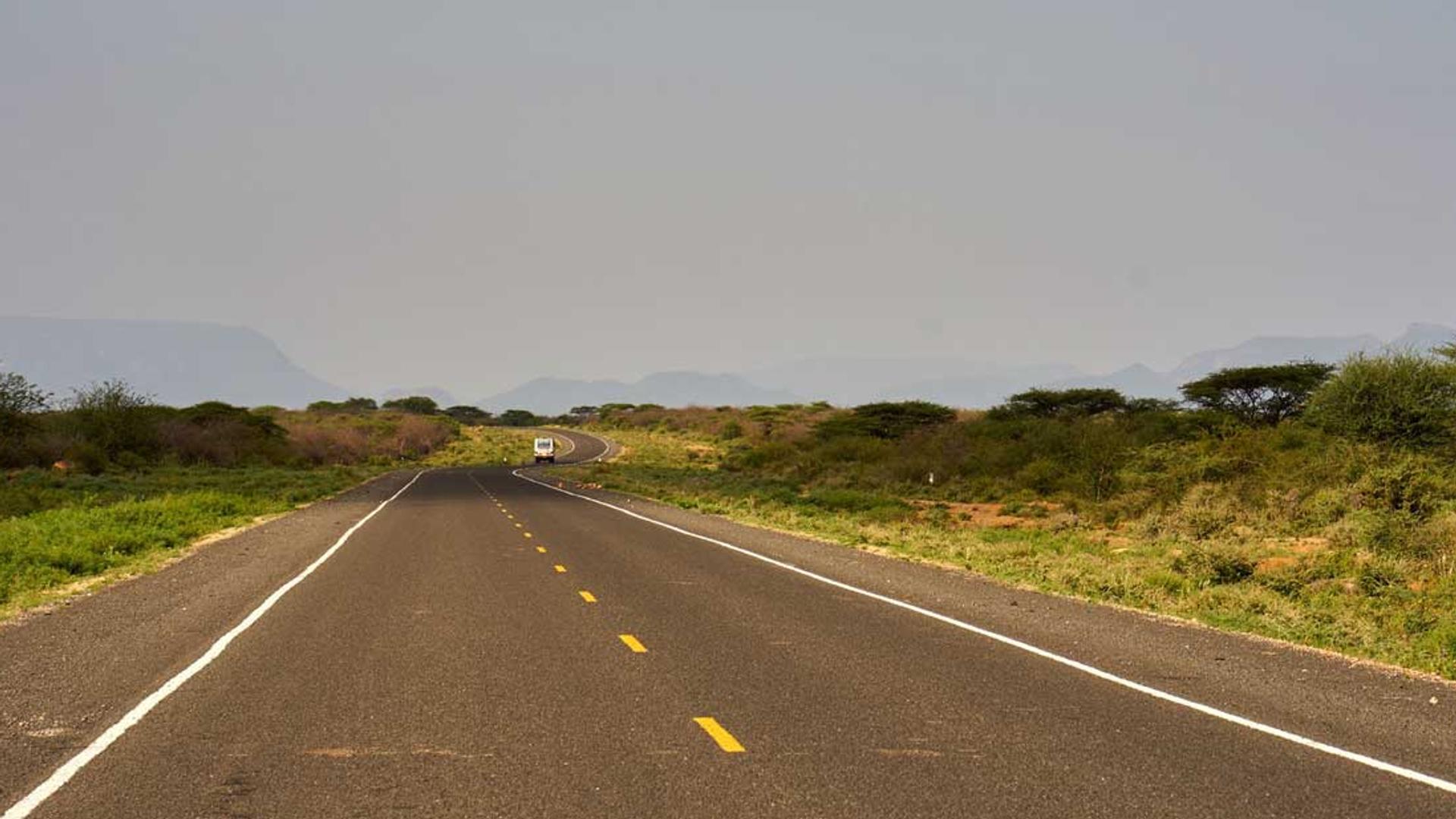
Within industrial logistics, fragmented border roads are classified as severe non-tariff structural blockades. For heavy freight haulers, commercial agricultural cooperatives in the Fouta-Djalon, and West African merchant networks, crossing from the city of Mali to the Senegalese trade border has historically been an infrastructural worst-case scenario. Fleet operators routinely absorb 10-hour transit times to traverse just 100 kilometers of deep unpaved tracks during the dry season a route that devolves into an gridlocked mud barrier immediately upon the arrival of the sub-regional monsoon.
This cross-border economic lockdown is officially coming to an end. The President of the Republic, General of the Army Mamadi Doumbouya, signed the formal executive decree ratifying the comprehensive structural financing framework alongside the Islamic Development Bank (IsDB). This deployment injects 140 million euros (approximately 162.5 million USD) exclusively toward the structural clearing, widening, and paving of the critical Mali–Gadalougué transport segment.
Supervised on-site by the sovereign project management unit AGEROUTE Guinée SA, this infrastructure offensive introduces high-velocity integration to the West African transport network.
Completing the Capital Stack: Unifying the IsDB and AfDB Portfolios
The structural financial engineering of this 107-kilometer logistics network is now fully de-risked and complete. The IsDB allocation acts as the concluding capital component, seamlessly blending with the baseline investments previously locked by the African Development Bank (AfDB). The AfDB had previously cleared an 80.93 million USD credit facility split between Senegal and Guinea to systematically upgrade the structural foundations of the Labé–Mali and Kédougou–Fongolembi connection routes.
Moving directly into active construction phases, civil engineering teams will now deploy across the 53-kilometer Mali-Gadalougué footprint. Technical specifications dictate an advanced 2x1 lane roadway layout engineered to meet all ECOWAS geometric baselines and heavy axle-load regulations.
Crucially, the €140 million portfolio advances an integrated "People-First" structural agenda. To anchor sustainable local value retention along the corridor, the corporate mandate requires the execution of supplementary community assets alongside the highway: solar-powered water boreholes, standardized open-air market stalls for local trading, modern rural health outposts, and a prototype primary school layout to serve rural communities along the route.
Conakry Port Anchors a Dual Market Pipeline to Bamako and Dakar
Beyond unlocking the landlocked agricultural basins of Middle Guinea, this corridor introduces an industrial-grade alternative for landlocked West African markets. By connecting Guinea's national road network directly into Senegal’s highly developed Kédougou industrial mining region, the highway builds a brand-new corporate route for Malian import-export syndicates.
Historically, freight lines moving outward from Bamako were heavily constrained to the classic paved Dakar–Bamako trade lane. The newly engineered Labé–Mali–Kédougou highway breaks this dependency, routing a highly cost-effective, direct freight pipeline straight into the Port Autonome de Conakry. For Guinea, this structural shift guarantees a major influx of multi-ton transit cargo, scaling up deep-water port utilization and driving national customs and port service revenues.
Risk Mitigation: Enforcing Post-Construction Asset Management
While the institutional funding structures are verified, the project's long-term commercial returns rely heavily on post-construction operational compliance. Infrastructure analysts emphasize that preserving the highway’s capital value requires strict execution across two primary bottlenecks:
- Rigorous Preventive Maintenance: AGEROUTE Guinée SA must institute modern tolling frameworks or dedicated maintenance funding reserves to prevent heavy multi-axle mineral and cargo trucks from structurally degrading the paved surfaces within their first few seasonal cycles.
- Eradicating Cross-Border Friction: A high-speed highway losses its commercial competitive advantage if haulers face prolonged bureaucratic delays at customs checkpoints or border security lines. The implementation of digital customs clearance architectures and unified, single-window cross-border processing between Guinea and Senegal will be a critical prerequisite to validate the corridor's financial modeling.