
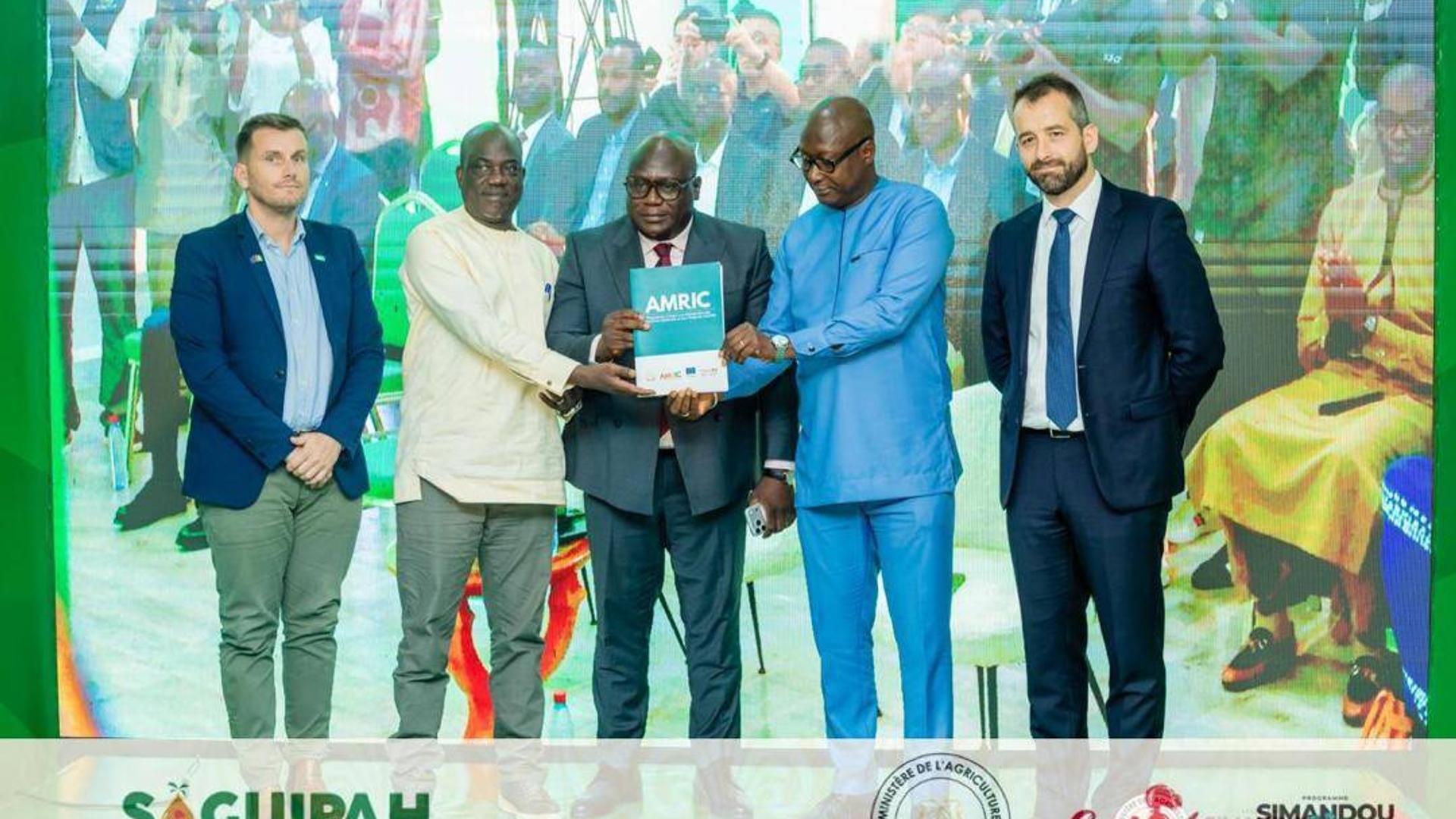
SOGUIPAH, one of Guinea’s most important agro-industrial enterprises, is entering a decisive new phase of transformation. After years of financial and operational challenges, the Guinean Palm Oil and Rubber Company (SOGUIPAH) has officially unveiled its ambitious 2026–2030 strategic plan in Conakry, signaling the start of a structured recovery process.
More than just an industrial company, SOGUIPAH is a cornerstone of the economy in Guinea Forest Region, employing over 4,000 people. However, restoring its role as a national agro-industrial leader required deep restructuring.
A structured financial and operational recovery
The new roadmap is the result of 17 months of technical and institutional work conducted with the General State Inspectorate and supported by Expertise France, the French Development Agency (AFD), and the European Union under the AMRIC project.
Key reforms already implemented include:
- A major debt reduction, lowering liabilities from 73 billion to 43 billion GNF
- Ongoing modernization of processing infrastructure and harvesting equipment
- Government-backed financing of 10 billion GNF to support plantation fertilization and recovery efforts
Aligned with Guinea’s industrial transformation vision
This recovery strategy is fully aligned with the Simandou 2040 national development vision, which prioritizes local processing and value creation rather than raw exports.
A flagship component of the plan is the installation of a processing facility with a capacity of 6 tons per hour, designed to significantly increase local transformation of agricultural production and strengthen Guinea’s agro-industrial value chain.
Putting people and governance at the center
Beyond infrastructure, the reform focuses heavily on human capital and governance.
A new partnership with VISTAGUI enables employees including manual workers to access improved credit conditions. At the same time, administrative systems are being digitized through new IT equipment deployment to enhance efficiency and transparency.
To protect productivity and assets, SOGUIPAH is also strengthening cooperation with local authorities in Diécké and Bignamou to combat theft and fraud affecting plantations.
With cleaner finances, upgraded infrastructure, and a renewed governance framework, SOGUIPAH is positioning itself for a sustainable comeback as a key pillar of Guinea’s agro-industrial future.