
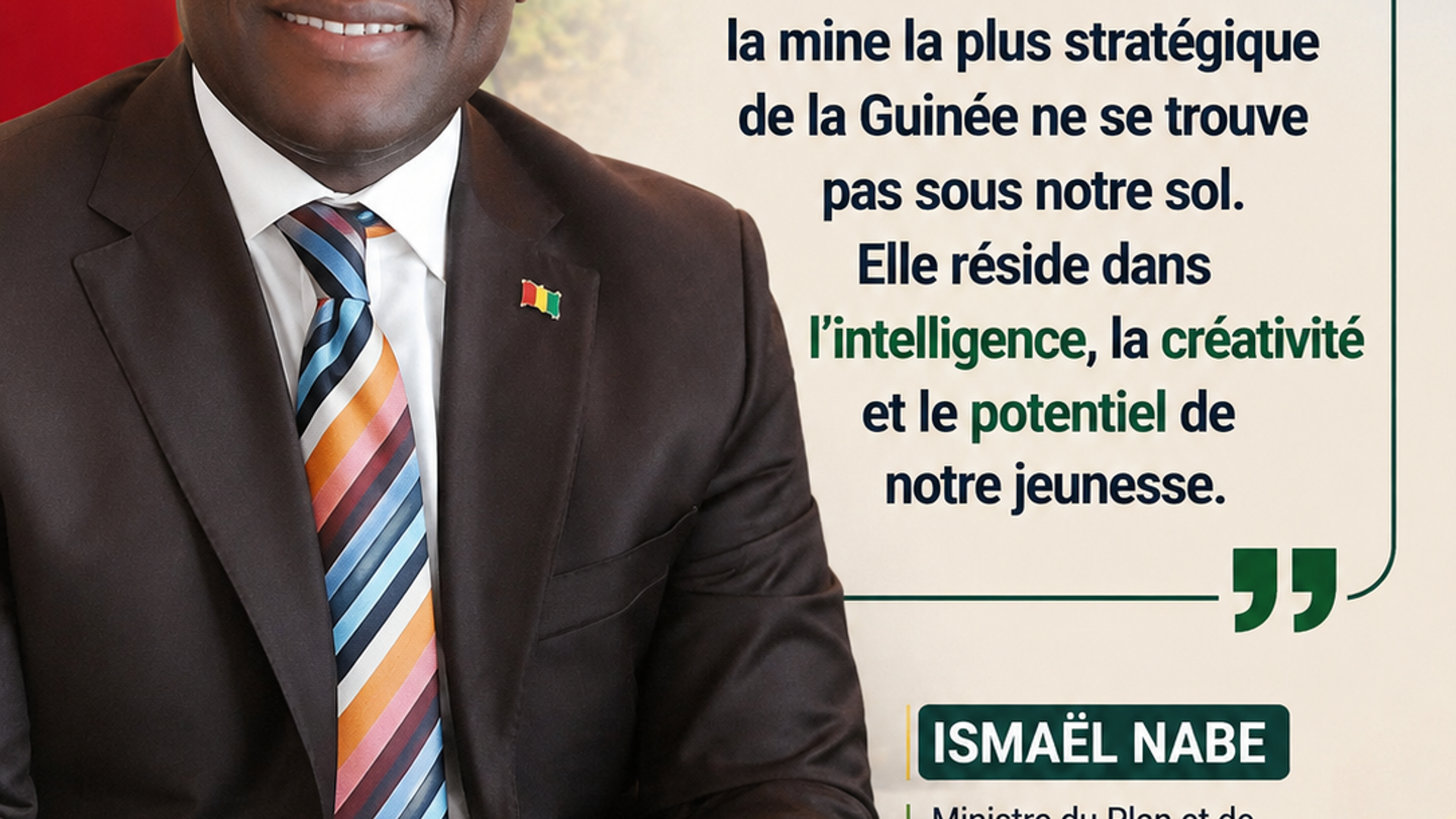
It was a statement that shifted the narrative. During the Fourth United Nations Future Forum for Least Developed Countries (LDCs) held in Helsinki, Finland, the Guinean delegation led by Ismaël Nabé challenged traditional perceptions of Guinea’s economic future.
The message delivered before the international community was clear: Guinea’s most strategic mine is not underground — it lies in the intelligence, creativity, and potential of its youth.
Under the leadership of President Mamadi Doumbouya, Guinea is actively promoting its international transformation agenda through the Simandou 2040 vision. And contrary to popular assumptions, the strategy extends far beyond iron ore extraction.
Human capital at the center of partnerships
During this high-level mission in Finland, Guinea placed strong emphasis on Pillar II of Simandou 2040: Education and Culture.
The approach is pragmatic: education creates knowledge, but international partnerships transform that knowledge into jobs, technological innovation, and economic competitiveness.
Within this strategic framework, Ismaël Nabé met with Finnish Foreign Minister Elina Valtonen to discuss a new era of cooperation between Conakry and Helsinki.
Strategic sectors for Guinea’s future
The discussions with Finnish authorities went far beyond diplomatic formalities. They focused on sectors capable of generating long-term resilience, sustainable development, and employment opportunities in Guinea:
- Education and skills development
- Water and sanitation
- Forestry and sustainable resource management
- Climate action and industrialization
These sectors are increasingly becoming priorities in global investment strategies, especially among European and Nordic partners seeking sustainable growth projects in Africa.
Convincing the OECD through credible reforms
Guinea’s diplomatic outreach also extended to senior officials from the Organisation for Economic Co-operation and Development.
During these meetings, the country presented a renewed national narrative centered on: “Reforms for growth, employment, and resilience.”
This momentum confirms an important economic reality: when a country combines a clear vision with credible reforms and strong international partnerships, sustainable development becomes achievable.
Guinea’s path toward a more prosperous and inclusive future is now taking shape and its greatest resource will not be extracted from the ground, but developed through the talent and intelligence of its youth.