
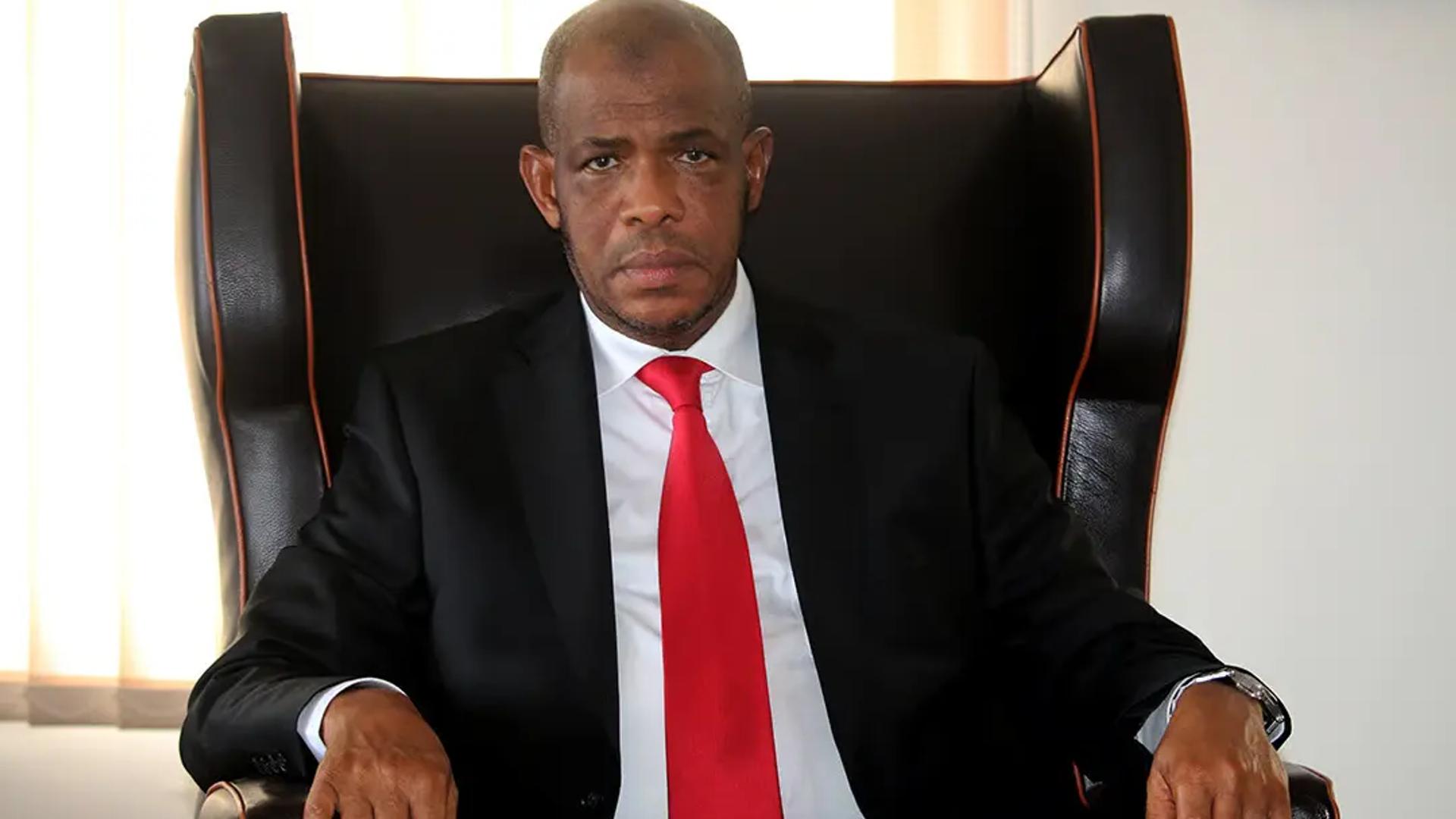
In West Africa’s business landscape, few local entrepreneurs have managed to build industrial groups capable of competing with multinational corporations. Yet Mamadou Saliou Diallo — widely known as “Saliou Kégnéko” — has done exactly that.
From humble beginnings, he built SONOCO Group, now one of Guinea’s most influential industrial conglomerates. More than a business success story, his rise reflects a broader ambition: reclaiming economic sovereignty through local industrialization.
From street hustler to businessman
The story begins in 1976.
Still a teenager, Mamadou Saliou Diallo left his native village of Kégnéko, in the Mamou region, and moved to Conakry with virtually nothing.
Like many young migrants arriving in the capital, survival came first. He spent nights outside bakeries waiting to be served before dawn so he could resell fresh bread in the streets. Later, he learned to drive fuel trucks and entered small-scale trading.
Those difficult years forged the discipline and resilience that would define his career. Obsessed with saving money and creating opportunities, he eventually secured a small loan from his mother-in-law — a turning point that allowed him to travel abroad.
Angola. Singapore. Jakarta.
Rather than relying on intermediaries, the self-taught entrepreneur traveled directly to international markets to source goods himself.
From import-export to industrial empire
Armed with international trading experience, Diallo founded the Société Guinéenne d’Investissement (SGI) in 1992, initially focused on import-export activities.
But his long-term vision went far beyond commerce.
For years, he repeated the same observation:
“All strategic sectors are controlled by foreigners — ports, airports, banks, mining. That must change.”
In 2004, SGI evolved into SONOCO Group, marking a decisive shift from trading imported products to manufacturing inside Guinea itself.
Building industrial sovereignty
Today, SONOCO operates across 10 industrial sites and employs more than 1,000 people through a highly diversified model.
Food security through Les Moulins d’Afrique (LMA)
The group’s crown jewel is Les Moulins d’Afrique (LMA), a major flour mill co-founded with Moroccan partners.
With a daily production capacity of 900 tons of wheat flour, LMA plays a critical role in Guinea’s food supply chain. SONOCO has also expanded into consumer goods through local beverage brands such as SALAM under Agro Food Industrie.
Controlling logistics with AM Transit
Understanding that logistics determines competitiveness, SONOCO built its own transport and freight ecosystem through AM Transit, covering air, sea, and land operations.
This strategic control over logistics gives the group greater resilience and operational efficiency.
Building Guinea’s infrastructure boom
Through subsidiaries such as Metal Import and SOHA, the group manufactures steel sheets and reinforcing bars used in Guinea’s rapidly expanding construction sector.
As Conakry undergoes major urban development, SONOCO has positioned itself at the center of the country’s infrastructure transformation.
Preparing the next generation
Unlike many business founders who struggle with succession, Mamadou Saliou Diallo has actively prepared the next generation of leadership.
His son, Abdoul Karim Diallo, often referred to publicly as “Abdoul Sonoco,” now serves as the group’s Managing Director, bringing a more modern managerial and strategic approach to the conglomerate.
Business success with a social mission
Deeply religious and widely respected for his philanthropy, Diallo has also institutionalized the group’s social commitment through the Sonoco WAQF Foundation.
From funding thousands of dialysis treatments to distributing meals and supporting vulnerable communities, the foundation reflects the entrepreneur’s belief that economic success must also generate social impact.
Despite his billionaire status, he has never forgotten the young bread seller he once was.
FINAL TAKEAWAY
Mamadou Saliou “Kégnéko” Diallo’s journey is more than an inspiring personal success story.
It is evidence that Guinea possesses the talent, ambition, and entrepreneurial capacity to build powerful industrial champions from within.
At a time when many African economies remain heavily dependent on imports and foreign operators, SONOCO stands as a rare example of locally driven industrialization — built by Guineans, financed by Guineans, and designed for Guinea’s future.