
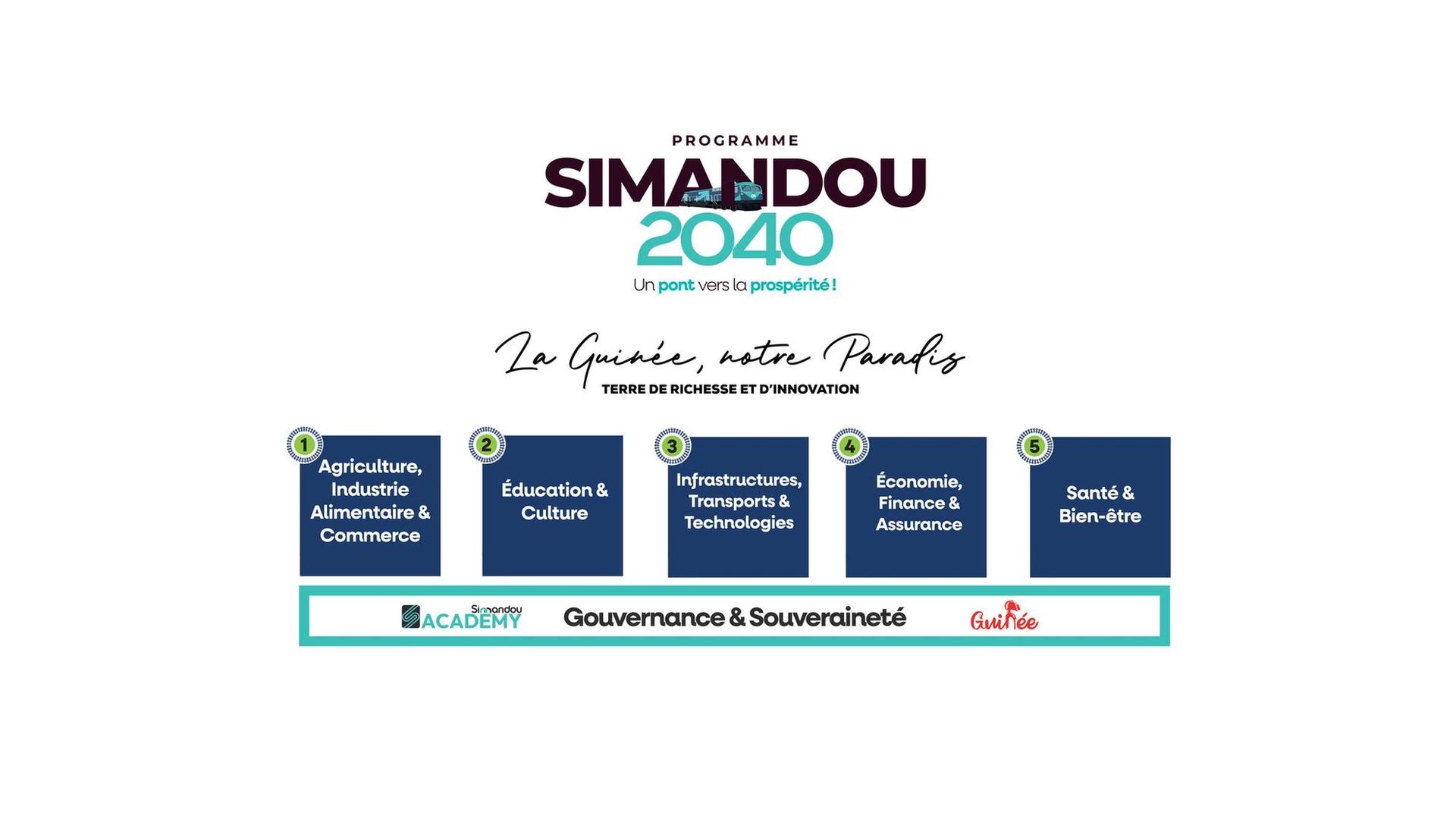
This is the document everyone was waiting for. The official roadmap of the Simandou 2040 Program has now outlined Guinea’s development path for the next fifteen years. The ambition set by President Mamadi Doumbouya is immense: to turn the country’s natural resources into a powerful driver of economic transformation.
The stated objective is clear: “Simandou should be for us what oil has been for Gulf countries.” To achieve this, the program relies on a total investment envelope exceeding $200 billion, deployed in three major phases.
Three phases to transform the economy
Launch phase (2025–2030):
$65 billion will be invested primarily in roads, railways, agriculture, energy, and education. The goal is to deliver 60 million tons of iron ore from the first year of full operation.
Diversification phase (2030–2035):
The economy will expand through local processing industries (especially agro-industry) and tourism development.
Consolidation phase (2035–2040):
Focus shifts to regional integration and the international expansion of Guinean industrial champions.
The plan is built on five strategic pillars: Agriculture, Education, Infrastructure, Economy, and Health. It includes 36 major reforms and more than 122 projects to be implemented.
Major projects already taking shape on the ground
The roadmap is not limited to promises—several concrete projects are already underway.
The first phase of the expansion of Ahmed Sékou Touré International Airport is already 90% complete. In the energy sector, a 300 MW power plant in Amaria is under construction, while an alumina refinery combined with a 250 MW power station is scheduled between 2025 and 2027.
In addition, a massive 650+ km railway line and the development of two new ports will position Guinea as a key logistics hub in West Africa.
Securing the future
To ensure credibility and attract investors, Guinea recently received its first sovereign credit rating (B+) from S&P. The country is also establishing a Sovereign Wealth Fund to finance strategic projects and preserve national wealth for future generations.
The development train is now in motion.